
Aaah--but who needs morals, scruples, or decency when you've got Scottie "Flopsweat" McClellan on point? From this morning's press briefing, here's ol' Flopsweat facing Helen Thomas (the transcript occasionally, and inexplicably, attributes McClellan's remarks to "THE PRESIDENT," but don't panic--as far as we know, Cheney's still the real president):
MR. McCLELLAN [. . . ] Helen, go ahead.Let's start with the merely statistical: Of the five specific "yes-or-no" questions that Thomas directed to McClellan, not one received a direct answer--let alone a "yes" or a "no." (You could count his bold statement "I've read the New York Times" as a fairly straightforward affirmative answer, but that hardly helps his reputation for forthrightness.) Also, as a general rule, the shorter and more direct Thomas's questions, the longer and more evasive McClellan's responses.
Q In a follow up for -- from this morning's briefing, I said that the President was aware in the run-up to the war that there were no weapons -- no weapons -- unconventional weapons had been found, and you sort of denied that it was in the memo.
MR. McCLELLAN: No, this morning you said that the President was aware there were no weapons of mass destruction. And that is not what that article spelled out.
Q This is what it -- the memo says: The President and Prime Minister acknowledge that no unconventional weapons had been found inside Iraq in the run-up to the war.
MR. McCLELLAN: Yes, let me remind you and take you back to that time period, because there was a U.N. weapons inspection team that was looking at these issues. And that team put out I think some sort of interim report back in December of '02, and that report showed that the regime was not coming clean. And we said at that time that the regime was continuing its pattern of non-cooperation and that if they continued --
Q They also said they didn't find any weapons.
MR. McCLELLAN: -- if they continued down that path, then we were prepared to use force. The President pursued a diplomatic solution. That's why we went to the United Nations. That's why we passed a 17th resolution that called on the regime to disclose or face serious consequences.
Q The memo says he wanted a war, basically that he was determined, and there were no weapons found.
MR. McCLELLAN: No, Helen, that's not an accurate assessment, and you know it. Because you covered --
Q Is this memo wrong?
MR. McCLELLAN: Well, you covered us at that time period. And let me remind you, go back to that time period, look at the public comments that were made, look at the numerous statements that were made by the President of the United States. We were continuing to pursue a diplomatic solution, but we recognized that it was necessary to prepare and plan accordingly in the event we would need to use force, and that's what we were doing at that time, as well.
But Saddam Hussein was given every opportunity to comply, and he continued to defy the international community -- even when he was given one final opportunity, or face serious consequences. So let's not rewrite history. It was very clear what was going on at the time.
Q Is this memo correct?
MR. McCLELLAN: I don't -- I haven't seen that memo, Helen.
Q You haven't seen The New York Times' memo?
MR. McCLELLAN: I've seen The New York Times.
Q Well, let me just follow on that. There's nothing in there that suggests that this is not an accurate reflection of a conversation that the President had with Prime Minister Blair, right?
MR. McCLELLAN: Well, I think that our public and private comments are fully consistent.
Q And therefore the guts of this appears to be accurate?
MR. McCLELLAN: I don't know what you're talking about "guts" of. Let's be specific in what we're talking about.
Q Well, comments made about the inevitability of war, the President's feeling about that at one --
THE PRESIDENT: Well, the President was making numerous public comments at the time, David. You covered those comments. The use of force was a last option, but we recognized that it was necessary --
Q It was his mind frame, though.
MR. McCLELLAN: -- to prepare and plan, and that's what we were doing at the time. And if you go and look at the public comments at the time, going back to late in the fall and winter period of 2002, on into 2003, we were making it very clear what the regime needed to do. And if it didn't do it, we were prepared to enforce the Security Council Resolution 1441, which called for serious consequences.
Q It didn't call for going to war.
Q Let me ask you a more fundamental question. The President -- according to this report of this memo -- said to Prime Minister Blair that he didn't expect that there would be any sectarian violence. That's obviously proven -- he was disproven. That is, in fact, the case that there is sectarian violence. Some worry about the prospects of civil war.
My question, though, is the President's judgments, this administration's judgments about the war that did not come to pass, that created a credibility problem with the American people with regard to how they view this war, does that not hurt the President when he now says, we need patience and we have to persevere?
MR. McCLELLAN: First of all, you made a very long statement there, and I'm not accepting the premise of the beginning of your question that that's an accurate reflection of things. We've talked about what we anticipated and what we didn't anticipate and what we prepared for.
And I think credibility is about doing what you say you're going to do. We did what we said we were going to do. Tyrants around the world know that we mean what we say, because we followed through on the resolution that was passed at the Security Council and held Saddam Hussein's regime to account. And he has been removed from power. The world is better off because Saddam Hussein is no longer in power.
We are working to transform a troubled region of the world, and that goes directly to our own security. The Middle East has been a breeding ground for terrorism. We had a false sense of stability because of previous foreign policies of previous administrations. This President made the decision after September 11th that we were going to take a comprehensive approach to the war on terrorism, and that we were going to work to spread freedom.
Q You're getting off point.
MR. McCLELLAN: No, it's very much on point.
Q Well, if I was too long-winded, let me just -- let me just be more precise.
MR. McCLELLAN: Sure.
Q The President assumed incorrectly, hindsight tells us, that there would not be sectarian violence after the invasion. Is that correct?
MR. McCLELLAN: Well, there were certain things that we anticipated, and certain things that we didn't anticipate. The President has talked publicly about what some of those were. And we've also worked to adapt and adjust to circumstances on the ground. Any time you're engaged in a war -- and the President talked about this issue last week -- things aren't going to go necessarily according to the plans. You've got to be flexible, you've got to be able to adapt and adjust to the circumstances on the ground. And that's exactly what we have done.
We know that the terrorists have made this the central front in the war on terrorism. They want to spread sectarian violence and create civil war. But the Iraqi political leaders and Iraqi religious leaders have come together, and they said, we need to move forward, we need to continue to move forward on forming a government that represents all Iraqis. The Iraqi army has held together. They have shown that they can perform well and help restore calm and restraint. And that's important, too. Now, there are certain areas where they didn't. But I think you have to look at the full picture. And just to make comments like that doesn't take a look at the full picture.
Jim, go ahead.
Most of McClellan's replies ("answers," as you can see, would be overstating it) were threadbare bits from earlier Downing Street Memo press conferences: "uncertainties of war," "look at the full picture," "September 11th," failures of "previous foreign policies of previous administrations" --and, of course, the ever-popular "Jim, go ahead."
That last one's Scottie's favorite.

 I've had several opportunities--and many more invitations--to shave it off, but at this point I'm one of the few people left who know what I look like without it. Believe me, America--we're all better off this way.
 When Bush and Fox sit down with new Canadian Prime Minister Stephen Harper in Cancún on March 30, all three leaders will pretend that relations are better than they are. They will note "progress" toward the goals of the Security and Prosperity Partnership, signed last year in Texas, even though it is a timid, paper-shuffling exercise that measures success by the number of bureaucratic meetings.
 Kudos to the rally organizers for getting the right message out there, untrampled and undiluted, and to the Oregonian for getting the message. This is one of the most comforting things I've seen in a good long while.
 Oliphant nicely captures the
  I sympathize to some extent--they're certainly not much use if what you specifically want is to capture the attention of Big Media or the Democratic Party's national brain trust. But I'm still not giving up on the concept, or the practice, of the Big Honking Rally.
 Tripp became Lewinsky's confidante and secretly recorded her talking about the affair. After becoming a figure of derision, she quit her Pentagon job and now sells bratwurst at her German deli in Middleburg, Va.
 Toles has a nice
  And while we're at it, here are three items--beyond the obvious (i.e., that women are chattel)--which seem to follow logically from South Dakota-style thinking, although the coat hanger enthusiasts seem to have overlooked it:
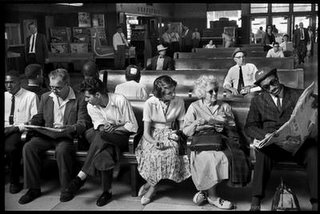 History is always popular in the South, particularly the white South. It's usually a noble history of pre-Civil War days and the glorious fight for Southern Independence. That history isn't as powerful for me as the history of the black South of 50 years ago. This is a history that makes me proud that we (black and white) who live in the Deep South remember. Check out
  Some people will tell you that we in the South haven't made any progress about race--usually these are self-contented people from other places who Randy Newman best characterized in
 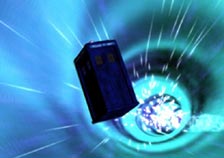 The series, about a renegade Time Lord who steals a time machine and gallivants around the space-time continuum, with an inexplicable string of usually-plucky and invariably-sexy companions (my favorite was Leela, but there were others)-- first began airing the weekend JFK was shot, and ran for about 25 years after that.
 But--whether you're a institutional purist or a downtown businessman, or just a Michael Myers fan--the movement to put publicly financed elections on the ballot, and thereby kill it once and for all, is not over. It'll be back on the fall ballot, or next spring . . . or Christmas 2007, at a theater near you.


